
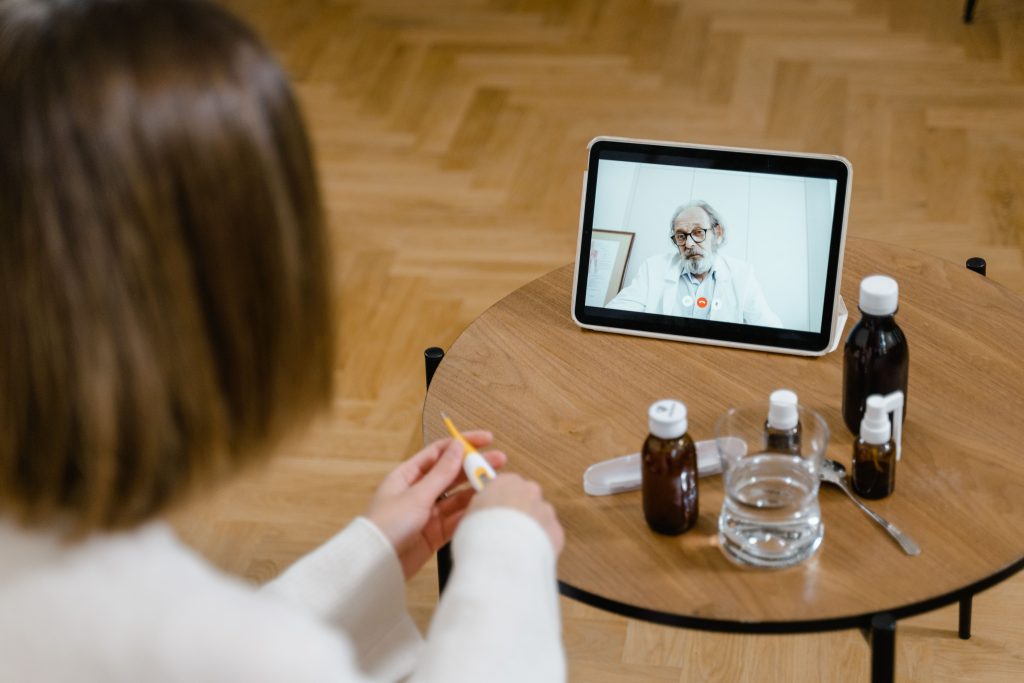
If you’ve ever tried to get depression care in California and felt like you needed a project manager, a traffic helicopter, and a second job just to make the appointments happen, online medication management can feel like someone finally stopped messing around. The benefits are pretty specific: you can get assessed and prescribed (when appropriate) without burning half a day on parking and waiting rooms, you can follow up more often so meds get adjusted faster, and you can keep care consistent even when life is doing its usual chaos thing.
That’s the headline. The real value is what happens after the first prescription, when the novelty wears off and you still need steady, boring, competent follow-through.
KEY TAKEAWAYS
- Online medication management for depression in California typically runs as a loop: intake screening, a live video visit, a treatment plan, then short follow-ups that keep dose, side effects, sleep, and functioning on a tight leash.
- It’s especially useful when access is the problem (rural distance, LA traffic, Bay Area waitlists), and when you need continuity instead of a new clinician every time you finally get an appointment.
- Telehealth outcomes for depression are broadly comparable to in-person care, and easier follow-ups can improve adherence and engagement when people would otherwise ghost treatment.
- Integrated care (therapy plus prescribing) tends to work better than either one alone because the care team can coordinate targets, track symptoms, and support you from crisis through stabilization.
- Safety is real in good telehealth: identity checks, measurement-based care, pharmacy coordination, and clear escalation for immediate danger. Privacy is also real when platforms follow HIPAA and don’t treat your mental health like ad-tech inventory.
- Costs are still a mess. Telehealth can reduce friction, not magically fix deductibles, copays, pharmacy pricing, or the Medi-Cal “covered but unavailable” problem.
How does virtual prescribing work in California?
You’re not ordering brain chemistry like you’re ordering takeout. The good services act more like a tight outpatient clinic that happens to live on your phone.
California rules matter here because your prescriber needs California licensure to treat you while you’re physically in the state, even if they’re sitting somewhere else in the U.S. That one detail trips people up all the time.
Intake and screening
Most platforms start with structured intake: symptoms, history, current meds, allergies, any substance use, and the stuff people conveniently forget until it matters, like past bad reactions to antidepressants. Expect standardized questionnaires too (PHQ-9 is common), because depression care without measurement is basically vibes.
A decent provider also screens for bipolar disorder, because giving an antidepressant without asking the right questions can backfire. This is one of those unglamorous clinical safeguards that separates serious care from “we hand out prescriptions.”
If you’re in immediate danger, this is also where a legitimate service will stop the flow and route you to emergency support. Telehealth is not a substitute for 911 or the ER when safety is on the line.
Diagnosis and treatment plan
The first live video visit is where the psychiatric evaluation actually happens (yes, that phrase matters). It’s not just “sadness scale, here’s a pill.” A good psychiatrist or psychiatric provider will map symptoms against diagnostic criteria, look at medical contributors, and ask about anxiety, sleep, energy, appetite, concentration, and functioning at work or school.
Then comes the plan. For depression treatment, that often means a first-line antidepressants trial, plus talk about timeline and side effects, plus what “success” looks like in plain English. This is also where integrated online therapy can get offered, and it’s not fluff. Coordinated care is one of the strongest arguments for telehealth when it’s done well.
On the regulatory side, prescribing rules depend on medication type. Most depression meds are not controlled substances, which makes remote prescribing far less legally tangled than, say, Adderall, Ritalin, Xanax, Valium, Klonopin, or Lunesta. (Also, if a platform is weirdly eager to prescribe controlled substances, take the hint and run.)
Federal rules have been the bigger moving target than California lately, and for 2026 the DEA telemedicine flexibilities have been extended through December 31, 2026, which is why you’ll see careful platforms building workflows around that window, like this explanation of the current DEA telehealth rule extension landscape.
Follow-ups and adjustments
This is the part that sells me on telehealth, even as a naturally skeptical person. Depression meds are rarely “set it and forget it.” It’s dose, response, side effects, timing, drug interactions, and life context. Virtual follow-ups make it easier to stay in the pocket: tweak dose, switch meds, add therapy, address insomnia, address sexual side effects, or just acknowledge, calmly, that you are not “failing” because a first trial didn’t work.
And yes, there’s data behind the equivalence claim. Telepsychiatry outcomes have repeatedly come out similar to in-person for symptom reduction, including reviews like this research on no significant differences in depressive symptom reduction.
What should patients expect at each visit?
People want a script because uncertainty is exhausting when you already feel hollowed out. Fair.
First appointment timeline
Most first visits run longer than follow-ups. You’re giving your history, getting risk assessed, and setting expectations. If you’re coming in with paperwork from past clinicians, bring it. If you’re coming in with nothing but a brain full of fog, that’s fine too, just be honest about what you can’t recall.
Wait times can be brutal in this state. One reason online medication management keeps winning is speed. In-person waits in California average around 28 days in some reports, and it’s hard to argue with that reality when you’re suffering, as reflected in these California mental health appointment wait times.
Symptom and side-effect tracking
You’ll get asked the same questions over and over. That’s not laziness. That’s measurement-based treatment, and it’s how you catch the difference between “I’m tired because I’m depressed” and “I’m tired because this dose is flattening me.”
Expect tracking like mood, motivation, irritability, appetite, libido, and daily life function. Also expect questions about self-harm thoughts, even if you find it annoying. It’s standard, and it’s protective.
Some platforms also bring in app-based check-ins. The better ones do it in a way that feels like support, not surveillance. You’ll see “Bold Health” style tools used for outcome tracking and appointment prep, which is helpful when your brain can’t produce coherent updates on demand.
Refill and lab workflow
Refills should be boring. If they’re dramatic, something is wrong.
Typically, you’ll confirm pharmacy details, confirm adherence, review side effects, then the prescription gets sent electronically. Labs aren’t routine for many antidepressants, but they can come up depending on your medical situation, other medications, or if your clinician is ruling out thyroid issues or anemia that can masquerade as depression.
If you’re on anything that requires monitoring, expect coordination with local labs. Telehealth doesn’t mean “no physical world,” it just means the physical world is used strategically.
Which depression cases fit remote care best?
Telehealth is strong, but it’s not magical. Some cases are tailor-made for remote care. Some deserve a tighter in-person net.
Mild to moderate depression
This group is often an excellent fit. You can get assessed, start meds if appropriate, pair it with therapy, and keep follow-ups frequent enough that you don’t drift. For working adults, parents, caregivers, students, anyone juggling schedules, this convenience is not a luxury. It’s the reason treatment actually happens.
It’s also where you see the engagement benefits people talk about, like the way virtual care can increase adherence and keep patients more involved, as described in this piece on improved geographic access to scarce psychiatric specialists, increased treatment adherence, and enhanced patient engagement.
Complex symptoms and comorbidity
If you’ve got layered anxiety, trauma, substance issues, or multiple prior medication trials, remote care can still work, but it depends on the service and the clinician. This is where you want a psychiatrist or an experienced psychiatric nurse practitioner who uses structured assessment, not a rushed checklist.
California has expanded access here too. As of 2026, qualified psychiatric NPs can practice more independently in the state, which widens the prescriber pool, and this breakdown of what prescribers can do in California captures why access is shifting.
When in-person care matters
If you’re actively suicidal with intent, experiencing psychosis, unable to care for yourself, or cycling into severe instability, you may need in-person evaluation, a higher level of care, or hospital-based stabilization. Telehealth can support step-down and continuity after a crisis, but it cannot replace emergency response.
If you’re in a mental health crisis and you’re in immediate danger, call 911 or go to the nearest emergency department. If you can stay safe, 988 in the U.S. is a starting point. A reputable platform will tell you the same thing.

What benefits matter most for California patients?
Other states have their own issues. California has distance, density, and a weirdly advanced ability to make basic errands take 90 minutes.
Rural and traffic barriers
California is enormous. Rural counties can be mental health deserts, and even in cities, traffic can turn care into an endurance sport. Two-thirds of rural CA counties reportedly lack a psychiatrist, and the shortage is worse for psychiatric NPs, which is why telehealth is more than a convenience feature, as described in this look at rural California psychiatrist shortages.
In LA, the “barrier” is not miles. It’s time, parking, and exhaustion. In the Central Valley or far Northern California, it’s miles and scarcity. Same outcome: you don’t get care.
Faster specialist access
Telehealth doesn’t create more clinicians out of thin air, but it removes geographic matching problems. You can see online psychiatrists who have openings, and you can keep the same provider across moves within the state, which matters more than people admit. Continuity is clinical power.
It’s also not fringe anymore. Mental health telehealth demand has stayed high nationwide, with large shares of behavioral visits happening virtually, as shown in this telehealth analysis of sustained mental health demand.
Better adherence and engagement
Depression makes “small tasks” feel like climbing a wall. Keeping appointments is a small task. Picking up meds is a small task. Reporting side effects is a small task.
Telehealth reduces the number of small tasks, which is why adherence often improves. You also get fewer cancellations when people don’t have to drive, park, sit, and drive back, which matches what some clinics report when comparing telepsychiatry vs in-person psychiatry.
Why combine therapy with prescribing?
Medication without therapy can feel like trying to patch a roof while the weather keeps changing. Therapy without medication can feel like talking clearly about pain you still can’t move through. Together, you get leverage.
One coordinated care team
When your therapist and prescriber are in the same system, they can coordinate goals, flags, and progress. It’s not about sharing your secrets. It’s about not making you repeat your story five times and not missing patterns that show up across sessions.
This is also where telehealth therapy gets more practical: same portal, consistent schedule, less administrative drag. Some “Bold Health” programs even blend check-ins between sessions so you’re not white-knuckling the week alone.
Measurement-based treatment
This is the nerdy part that works. Tracking symptoms over weeks, not just relying on memory, makes medication management sharper. You can see if irritability dropped after a dose change, if sleep improved, if motivation budged, if side effects are fading or worsening.
It’s also one of the reasons clinical outcomes can match in-person, like the findings in this review of telebehavioral vs in-person counseling effectiveness.
Crisis-to-stabilization support
People imagine “crisis support” as a dramatic hotline moment. Often it’s quieter. It’s noticing a slide early, getting an extra visit, adjusting meds, tightening therapy frequency, pulling in coping skills, building a safety plan, and keeping you outpatient when possible.
Remote care can make those quick pivots easier, and follow-up compliance tends to be better for remote patients in some settings, like this discussion of telebehavioral health that lasts across California.
Safety, privacy, and prescribing rules in California
Safety in telehealth is a process. Identity verification, informed consent, clear documentation, structured screening, and escalation pathways. A serious provider will ask where you’re located at the start of visits, because they need to know which emergency resources apply.
Privacy is also a process. HIPAA matters, and so do practical choices like whether you’re taking a video call in a place where you can speak freely. Use headphones. Turn on a white noise machine outside the door if you need to. Protect your own space.
On prescribing: California licensure is non-negotiable, and controlled substances have extra layers of rules. For depression meds, it’s usually straightforward. For controlled substances, expect stricter monitoring, tighter policies, and sometimes an in-person requirement depending on the medication and evolving federal rules. If a platform acts casual about it, that’s not “modern.” That’s reckless.
Costs, insurance, and affordability tradeoffs
Medication and therapy costs for mental health are basically a prank people are forced to play along with. I’m not even trying to be cute. The pricing stack is real: visit fees, copays, deductibles, pharmacy pricing, brand vs generic, prior authorizations, and the fact that depression care is not one appointment, it’s a long, sometimes annoying relationship with the system.
In San Francisco, private therapy can easily hit $150 to $300+ per session, which is still wild to me every time I see it, and this guide on how much therapy costs in San Francisco spells out the range.
Insurance helps, until it doesn’t. California has parity protections, and many plans cover tele-mental health comparably to in-person care, which is why these notes on insurance parity laws matter. The trick is the network. The trick is always the network.
Medi-Cal can reduce cost, but the access problem is real: “covered” and “available this month” are not synonyms. If you have a plan and you’re stuck, call the mental health customer service number on the back of your insurance card and ask, bluntly, who is taking new patients right now and what the wait time is.
If work is collapsing because symptoms are wrecking function, short-term disability for mental health can be worth exploring, and this overview of short-term disability for mental health gets into what documentation tends to matter. Helpful, not guaranteed, and paperwork-heavy at the worst possible time, which is kind of the theme of the whole system.
One more quiet cost factor: tech. Telehealth assumes stable internet and privacy. If you don’t have that, the “access” story gets complicated.
Here’s a simple comparison that’s less marketing, more reality:
What you’re dealing with | Online medication management | In-person care |
Getting in the door | Often faster scheduling; less travel | Often longer waits; travel and parking |
Follow-up frequency | Easier to do short, frequent visits | People stretch visits because it’s a hassle |
Coordination with therapy | Strong when integrated in one platform | Strong when systems talk, weaker when siloed |
Safety escalation | Works well for outpatient monitoring; must route emergencies out | Easier immediate physical escalation if needed |
Cost drivers | Visit fees, insurance network, pharmacy costs, tech access | Same plus travel costs and time off work |
Conclusion
Online medication management for depression in California works best when you treat it like what it is: real outpatient care with fewer logistical punishments. The benefits are access, continuity, and tighter follow-up loops that make meds safer and more effective over time, especially when therapy is in the same ecosystem instead of floating somewhere else in your calendar.
If you’re choosing between options, I’d focus less on glossy claims and more on whether you’ll actually be able to get seen again in two to four weeks, by the same provider, with a plan that can flex when your symptoms do. That’s where stability comes from. Not from hype.
FAQ
Is online medication management “as good” as in-person for depression?
For many patients, outcomes are comparable, and the practical advantage is follow-up consistency, which is half the battle, reflected in research like this review of telepsychiatry effectiveness compared with face-to-face care.
Can a prescriber start medication without meeting me in person in California?
Often yes for common depression meds, assuming the clinician is properly licensed in California and follows current federal telemedicine rules. Controlled substances are a different category and can involve extra restrictions.
What if I’m in San Diego and my prescriber is in another city?
That’s normal. As long as you’re in California during the visit and the clinician has California licensure, location within the state usually doesn’t matter. San Diego patients often use telehealth simply to dodge long waits and commute friction.
How do I know the platform is private and legitimate?
Look for HIPAA-aligned policies, transparent clinician credentials, clear crisis procedures, and secure prescribing workflows. You’ll also see modern platforms using secure apps that coordinate outcomes and pharmacies, similar to how digital medication management services are described here.
What if I need more help than telehealth can provide?
A responsible provider will tell you that directly and help route you to a higher level of care, not keep you stuck in a service that can’t hold you safely.
Find Relief From Depression With Expert Medication Management
Depression can affect every part of your life, from your relationships and career to your motivation, energy, and sense of self. When it feels difficult to get through the day, you don’t have to face it alone. At Blue Sky Psychiatry, we offer personalized medication management designed to help you find relief from depression and take meaningful steps toward a healthier, more fulfilling life.
Dr. Mindy Werner-Crohn and Shira Crohn, PA-C, work closely with you to understand your symptoms, medical history, and treatment goals. They carefully evaluate medication options and provide ongoing support to ensure your treatment remains effective as your needs evolve. Through regular follow-up appointments and thoughtful adjustments, we help you find the right balance between symptom relief and overall well-being.
The right medication can be a powerful tool in your recovery journey. Whether you’re seeking treatment for the first time or looking for a better approach after previous treatments have fallen short, Blue Sky Psychiatry is committed to helping you feel more hopeful, energized, and in control of your future.
Reach out to Blue Sky Psychiatry to learn more about upcoming groups and find the one that fits your needs.


